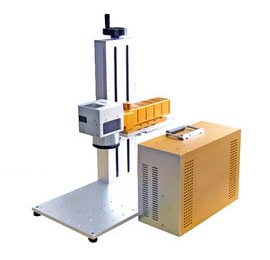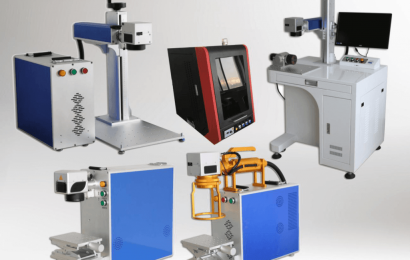

This article briefly introduces the structure, working principle, classification, characteristics and research progress of fiber lasers. Finally, the development prospects of fiber lasers are prospected.
The fiber laser was invented in 1963, and the first commercial fiber lasers were on the market at the end of the 1980s. It has experienced more than 20 years of development. Fiber lasers are regarded as an amplifier for ultra-high-speed optical communications. Fiber laser technology presents broad application prospects and huge technical advantages in high-speed and large-capacity wavelength division multiplexing optical fiber communication systems, advanced optical fiber sensing technology and high-power lasers.
Fiber lasers have many unique advantages, such as low laser threshold, high gain, good heat dissipation, many tunable parameters, wide absorption and radiation, compatibility with other fiber optic equipment, and small size. improve. Has reached 10-100kW. As an industrial laser, it has gradually become the inverter with the highest output power. The technical research of fiber lasers has received widespread attention from countries all over the world, and has become a hot frontier research paper in the international academic community. Its application field has also briefly introduced the structure, working principle, classification, characteristics and research progress of fiber lasers. Finally, the development prospects of fiber lasers have been prospected.
The structure and working principle of fiber laser
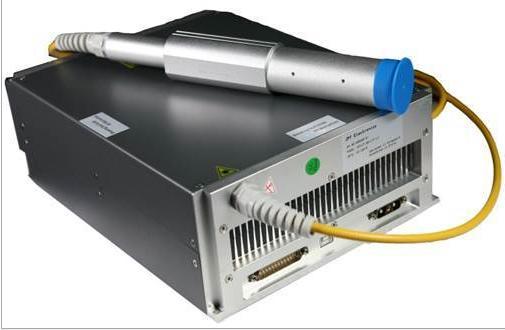
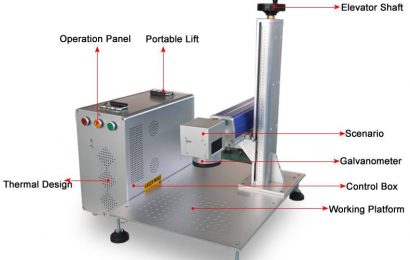
Fiber laser structure
Same as traditional solid-state and gas lasers. Fiber laser is basically composed of three basic elements: pump source, gain medium, and resonator. The pump source generally uses high-power semiconductor lasers (LD), and the gain medium is rare earth instead of optical fiber or ordinary nonlinear optical fiber. The resonant cavity can be composed of various linear resonant cavities by optical feedback elements such as fiber gratings, or can be composed of various conversion devices. The pump light of a ring resonator is inserted into the gain fiber through an appropriate optical system. The gain fiber forms a population inversion or nonlinear gain after absorbing the pump light and generates spontaneous radiation. After the model selection. Finally, a stable laser output is formed.
The gain medium of the fiber laser is a fiber core with residual rare earth ions, and the replacement fiber is clamped between two carefully selected mirrors. This constitutes an F-P resonator. The pump beam enters the rare fiber from the first mirror. in. The lasing output light is output from the second mirror.
The working principle of fiber laser
Fiber amplifiers that shorten rare earth elements promote the development of fiber lasers, because fiber amplifiers can form fiber lasers through an appropriate feedback mechanism. When the pump light passes through the rare earth ions in the fiber. Will be absorbed by rare earth ions. At this time, the rare earth atom electrons that absorb the photon energy will be excited to a higher lasing energy level, thereby achieving ion number inversion. The number of ions after the inversion will transfer from the high energy level to the ground state in the form of radiation, and release energy. Complete stimulated radiation. There are two ways of radiation from the excited state to the ground state: spontaneous emission and stimulated emission. Among them, stimulated radiation is a kind of radiation with the same frequency and phase, which can form a laser with good coherence. Radiation far exceeds the physical process of spontaneous radiation. In order for this process to continue to occur, ion number inversion must be formed. Therefore, more than two energy levels are required to participate in the process, and a pump source must provide energy.
Fiber lasers can actually be called wavelength converters. It can convert the pump wavelength light into the required lasing wavelength light. For example, insert an erbium fiber laser to pump 980nm pump light and output 1550nm laser light. . The laser output can be continuous or pulsed. Whether the laser output is continuous or pulsed mainly depends on the laser working medium. If the output is continuous, the spontaneous emission lifetime of the upper energy level of the laser must be higher than that of the laser. If it is output in pulse form. The life of the lower energy level of the laser will exceed the upper energy level, and the fiber laser will be output in the form of pulses. There are two lasing states: three-level and four-level lasing.
Classification of fiber lasers
(1) Classified by gain medium: rare-earth ion doped fiber lasers (Nd3 +, Er3 + .yb3 +, Tm3 +, etc., can be quartz glass, zirconium fluoride glass, single crystal). , SBS nonlinear effect produces laser with tunable wavelength). Diffusing different rare earth ions in the optical fiber and using appropriate pumping technology can obtain laser output of different wavelengths. (2) Classified by resonant cavity structure: F-P cavity, ring cavity, ring reflector fiber resonator and “8” shaped cavity, DBR fiber laser, DFB fiber laser (3) Classified by fiber structure: single and double cladding Fiber lasers, photonic crystal fiber lasers, special (4) classified by output laser type: continuous fiber lasers. Ultra-short pulse fiber laser, high-power fiber laser. (5) Classification by output wavelength: S-wavelength (1460~1530 nm), C-wavelength (1530) ~1565 nm), L-both ends (1565 1610 nm).
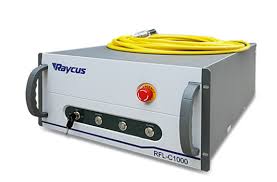
Features of fiber laser
In the laser oscillation. The energy is concentrated on the standing wave replaced by the resonant cavity to produce coherent light. In optical technology, only optical fibers and waveguides can perform three-dimensional mode control on the optical axis direction and the transverse mode direction. Before the thermal damage caused by the laser, stimulated Raman scattering and stimulated Brillouin scattering occurs with a single-mode fiber, if there is no mode competition, then as long as the gain and loss ratio of the laser limit the storage in the laser medium Energy conversion efficiency. Due to the low loss of the fiber itself, it is subdivided from other lasers and has an ultra-long (5-10). m above) The gain to loss ratio of the fiber laser with characteristics is 100 times to 1000 times larger. Therefore, even with mode control, the stored energy can be converted into laser light (light energy) with almost no loss.
In fact, the output power of the fiber laser increases linearly in proportion to the pump light, and its conversion efficiency reaches 85%. Under the excitation of 950 nm wavelength, the quantum efficiency of ytterbium oscillating at 1080 nm wavelength is 88%. For example, a single-mode fiber laser with a core diameter of 40 m, a length of 10 m, and an output power of 1.36 kW has an actual laser medium volume of only 9 mm. This shows that a microchip laser with a size of 2 mmx2 mm~2.5 mm can produce an output power of 1.36 kW.
Kilowatt fiber laser has the same volume as microchip laser
For fiber lasers with ultra-long gain pumping and low loss characteristics, if pumping power is added, laser oscillation can be easily realized only by reflection. Therefore, the key to technology development is how to inject pump light.
IPG and SPI, the supplier of fiber lasers, have gradually developed a way to extend a single LD fiber and then inject it into the first cladding of the double cladding. The best way as a basic part. In addition, the scientific researchers also proposed the optical fiber disc method, which is suitable for LD pumped solid-state laser elements that transmit light through optical fiber. The pump method can also meet the requirements of output power above kilowatts. The refractive index forms a one-dimensional FBG. Diffracted with ordinary diffraction gratings, this grating grating has a difference in refractive index. Length> l cm, almost lossless, can be a mirror for selecting multiple wavelengths. Therefore, even if a multi-level overlapping FBG laser cavity is formed, high efficiency energy conversion can be maintained.
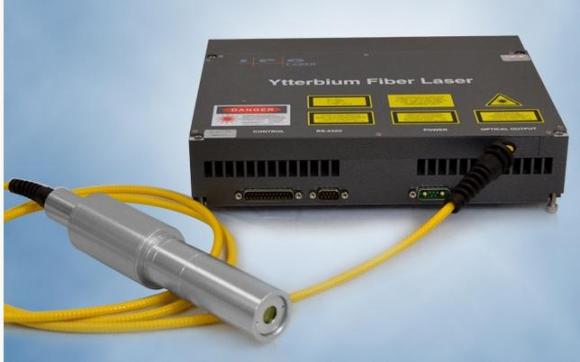
Raman fiber lasers can achieve nearly 50% conversion efficiency through the three-stage FBG resonator in the case of multi-wavelength displacement. If the optical fiber is connected to the ring, the light transmitted in both directions will interfere to form a dynamic diffraction grating. Researchers have successfully developed a single-frequency fiber laser based on the laser for effective gravity wave detection. Yb fiber laser has a quasi-three-level energy structure, so when it can be excited, it has a slight ground state absorption. Slightly longer is 16. The m ring mirror is equivalent to 30 million absorption diffraction gratings formed by light interference, which can perform single longitudinal mode oscillation, and its spectral line width is only 2 kHz. In single-frequency T operation, the output stability is excellent, and the average stability of 3 h is only 0.8%. Except that fiber lasers that oscillate in a pure mode cannot achieve this stability, commercial fiber lasers have a stability of 2%. Using fiber fusion splicing technology, the entire laser can be supplemented by a fiber optic system, which is also one of its advantages. In the future, this all-fiber narrowband main vibration power amplification (MOPA) system will help to play a role in gravity wave detection in space.
Fiber laser all-fiber narrowband MOPA system
Fiber lasers have the characteristics of good beam quality and high output power stability. Therefore, small single-mode fiber lasers of 10-100 W have high application value in the industrial field. The light source, if the optical system is fully utilized. The spot diameter of the theoretical limit can be used for micro processing. It is easy to realize correction, micro welding and micro processing by using this oriented beam. Into coronary stents, etc. The non-offset laser can process up to micron-level processing of shape memory alloy thin tubes with a thickness of 0.2 mm. Compared with other lasers for sorting, fiber lasers have the characteristics of compact size, high output power and stability, no water cooling, comprehensive laser efficiency as high as 20%-25%, and available alternating current. It can be considered. Fiber laser is a kind of laser with extremely convenient laser output.
The development prospects of fiber lasers
Fiber laser uses optical fiber as waveguide medium, high recombination efficiency, easy to form high power density, good heat dissipation effect, does not need a large number of refrigeration systems, has high conversion efficiency, low threshold, good beam quality and narrow line width. Hybrid rare-earth ions can achieve dual-range laser output of 380-3900 nm, and wavelength selection and tunability can be achieved by adjusting the fiber grating resonant cavity. Easy system integration, normal operation in harsh environments of high temperature, high pressure, high vibration, and high impact. Its output spectrum has higher tunability and selective medical and biological markets. Strong demand drives femtoseconds (ultra-fast) People are working hard to measure and analyze the characteristics of living cells, tissues and virus transfer in real time.
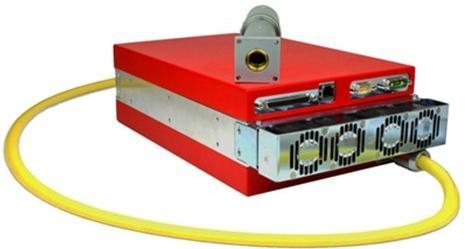
These ultrafast laser treatments can obtain real-time information during rapid, non-invasive diagnosis of patients. The cost of the existing ultrafast laser manufacturing technology is too high, the size of the system is also too high, and fiber laser manufacturers also focus on recommending the application of fiber from the aspect of small size. Life and health sciences are a very strong market. Because there will always be new applications, many of which are laser-based applications, and medicines are constantly seeking improvements at the same time. Laser is no longer limited to only a surgical tool, it will be more widely implanted in medical diagnosis (such as cell imaging), drug testing, DNA classification, cell classification, and protein analysis. Laser diffusion is widely used in unheard of fields.
(1) Improve the performance of the fiber laser: how to improve the output power and conversion efficiency, optimize the beam quality, change the length of the gain fiber, improve the stability of the system and improve more clever, the above goals will be the future research in the field of fiber lasers Key points; (2) Development of new fiber lasers: In the time domain, ultrashort pulse mode-locked fiber lasers with smaller alternatives have always been a research hotspot in the laser field. Power femtosecond pulsed fiber lasers have always been a long-term goal pursued by people. Research breakthroughs in this field can provide an ideal light source for optical communication time division replacement (OTDM), and can effectively drive laser processing, laser marking and laser encryption. , A kind of cross-correlation industry development of nonlinear fibers using ZEBLAN materials (zr, Ba, La, Al, Nd) as the laser medium; in the frequency domain, broadband output tuning fiber lasers will become a research hotspot. The wavelength can be converted several times. It is foreseeable that through the improvement of related technologies, fiber lasers will develop into a broader field, and may become a new generation of light sources to replace solid-state lasers and semiconductor lasers, forming a new industry.
In summary, fiber laser technology is a new technology research hotspot that is receiving high attention and rapid development. The scientific research and product application fields involved are very extensive, and it has huge potential application value and broad market prospects. The gradual maturity and commercial application of various types of fiber laser technology will greatly promote the development of related fields, and will also cause profound changes in related technical fields.