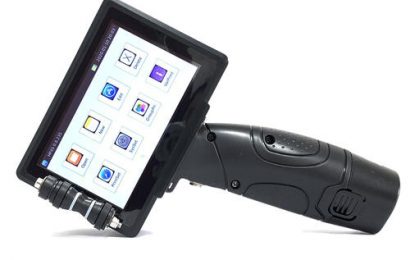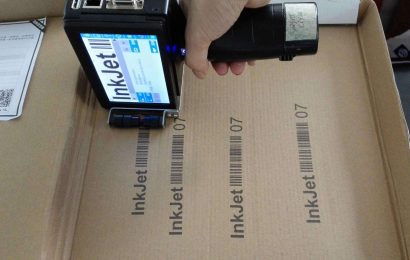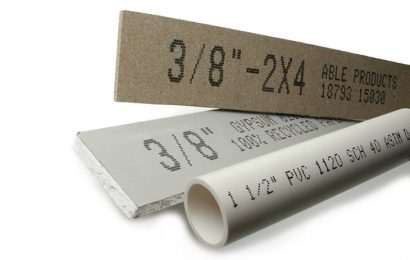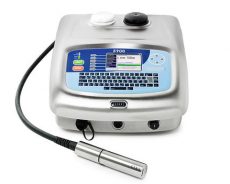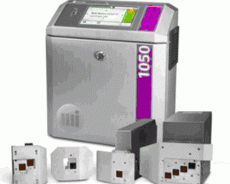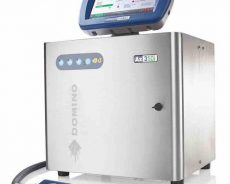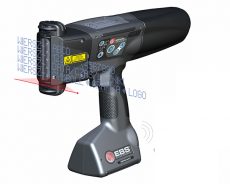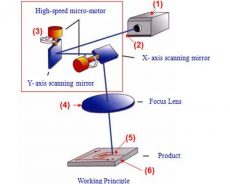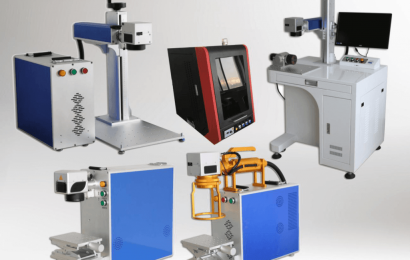

The inkjet printing technology of the automatic inkjet printer is also called non-contact printing, and speed and print quality are the most critical considerations. Both CIJ technology and DOD technology are processes from computer to paper-neither of them requires a printing press; however, the role of pushing ink onto paper is completely different.
According to the different working principles of inkjet printers, inkjet printers can be divided into the following two categories:
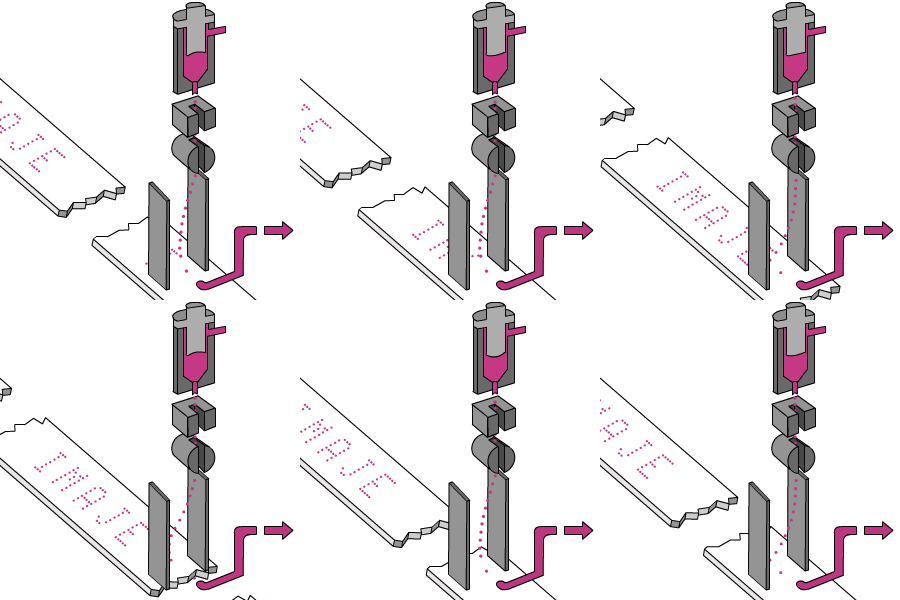
1: Continuous jet inkjet printer (continuous inkjet printer) is referred to as CIJ type, also known as dot matrix inkjet printer (small character inkjet printer). The continuous inkjet system uses pressure from a single nozzle. It is continuously ejected and breaks after crystal oscillation to form ink dots; the ink dots are charged and polarized by high voltage and scanned into characters on the surface of the moving object.
Most of them are used in the packaging market with low imaging requirements and high-speed requirements. Most industrial inkjet systems use CIJ technology. Using this technique, the stream of ink droplets is produced in a linear fashion and an image is produced through a version.
The speed of industrial CIJ system can reach 1000 feet per minute, which is a little faster than DOD, but the image quality is also lower than that of DOD technology.
CIJ is the best solution for the numbering and marking of packaging and printing products for food, beverage, medicine and beauty packaging and printing for a large number of direct mail orders.
Because the automatic inkjet printer ink jet is continuous, the continuous inkjet printer can use many types of inks, especially those that dry very quickly after inkjet (within 1 second). Therefore, the continuous inkjet coding technology is ideal for the printing of products with non-permeable surfaces (called cans and plastics) that need to be processed quickly after printing.
You can also use pigment inks with more vivid colors
Two: On-demand inkjet printers (Drop on Demand) are referred to as DOD type, also known as high-resolution inkjet printers.
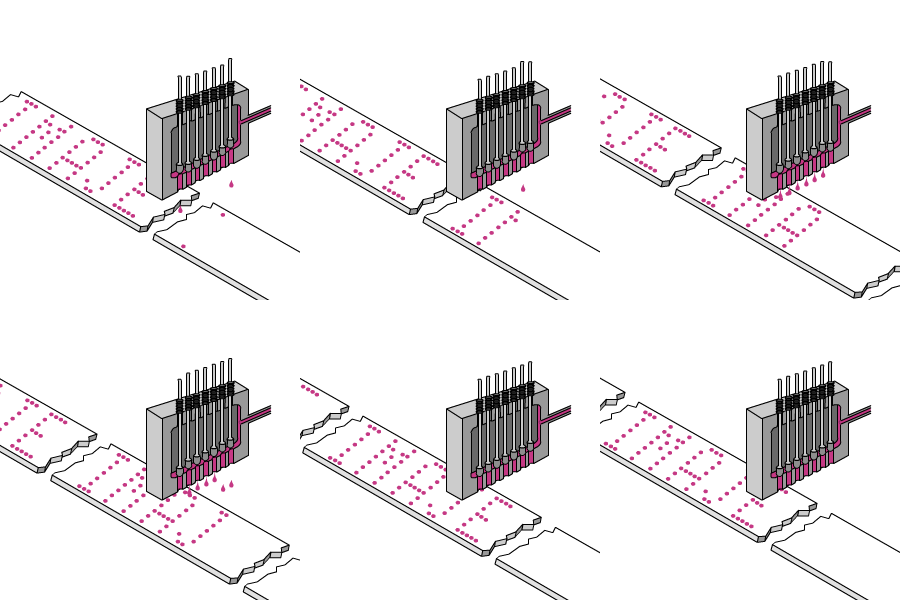
The nozzle of the industrial Drop on Demand ink supply system consists of multiple high-precision valves. When printing, the valve corresponding to the font opens and closes quickly, and the ink is ejected at a constant pressure to form characters or graphics on the moving surface.
A digital signal produces a drop of ink on paper, not a stream of ink. The latest DOD print head, the color is formed on the paper with a more precise set of dots, which is similar to traditional offset printing. Therefore, in four-color high-precision printing where quality is the most important parameter, DOD is the most ideal choice, as it can produce effects close to photographic quality. The printing speed of DOD is between 100 to 300 feet per minute.
DOD uses include wide-format printing, packaging color icons, shopping point display signs, fabrics and prominent surface signs. The high-resolution inkjet printer has a diameter range of 1.0mm-70mm and can print dot matrix fonts (pinpoint), high-resolution fonts, and even print any font on the computer. The printing speed is not affected by the font dot matrix, and the acceleration can reach 120m/min. When the machine is running, the ink is jetted on demand, the ink is not recycled, and the ink density is consistent. There is no need to add substitutes (solvents), and the operating cost is lower than CIJ.
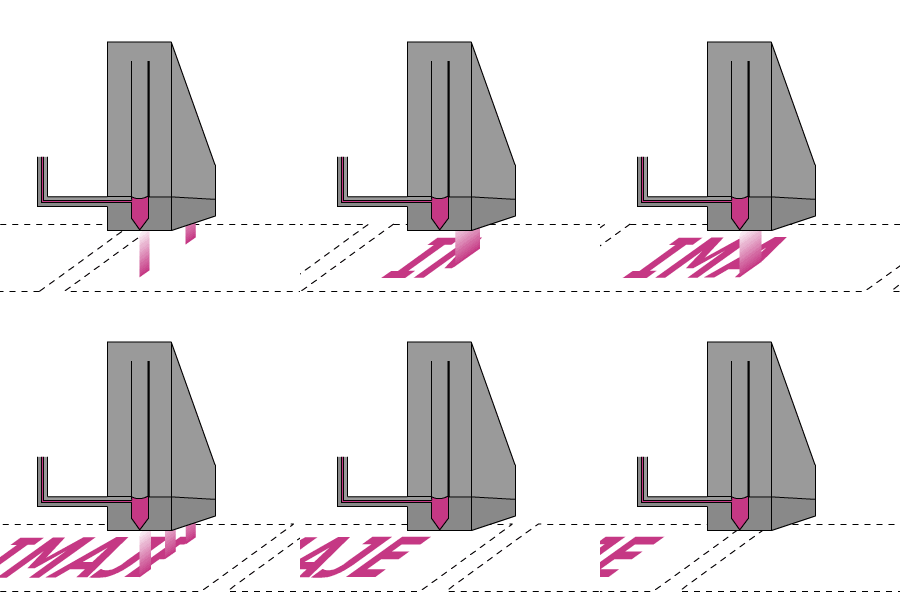
Ink does not need to be recycled, and the ink supply system is well sealed to avoid ink contamination. The ink is ejected directly, with its own pressure, no pressure pump or other equipment is required to provide pressure, and the failure rate is low. The control system is simple and reliable, and easy to operate and maintain.
The ink is not recycled, it uses environmentally friendly ink, has no pungent odor, and has less environmental pollution. There are no high-power devices inside the machine, no heat dissipation is required when working, and the equipment system is well-closed and not affected by the working environment.
There are no vulnerable parts inside the machine, and the maintenance cost is greatly reduced compared to the CIJ inkjet printer. Strong scalability, use the special control software for high-resolution inkjet printers to edit the printing content and control the inkjet printer through the Windows platform. The visualization of the operation makes the inkjet printer more powerful, and it also makes the user’s operation and use of the inkjet printer changeable Is more interesting.
These advantages of automatic high-resolution inkjet printers are being paid attention to by the market, and sales are increasing.