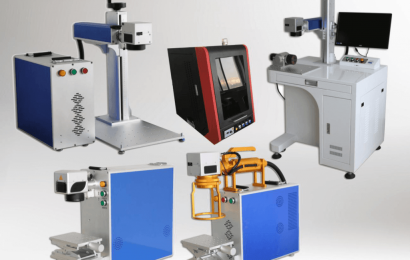

Although laser has a wide range of applications in the fields of cutting, drilling and welding, its application in industrial cleaning is relatively new and there is a wide range of space for exploration.
The application of laser cleaning mainly stems from the need for a non-toxic, non-abrasive cleaning method on the market. This method can be used as an alternative to the previously used chemical cleaning, manual cleaning and abrasive jet cleaning methods.
Advantages of laser cleaning
The main problems of traditional cleaning methods include: impact on the environment and wear on the substrate. The sandblasting system generates a lot of waste and damages the fine surface of the substrate; while cleaning with chemical solvents, it will generate potentially dangerous steam and liquid waste.
The shortcomings of traditional cleaning methods have promoted the application of laser technology in the field of surface cleaning. Because laser cleaning has many advantages, it has now become the most effective way to remove unwanted substances on the surface of materials.
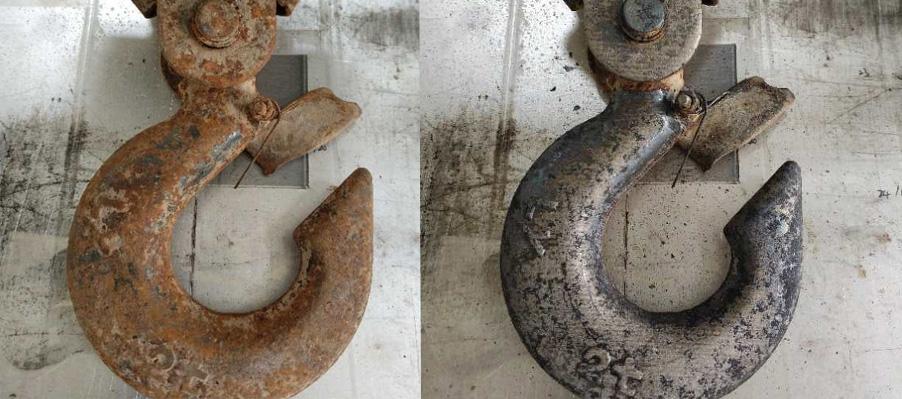
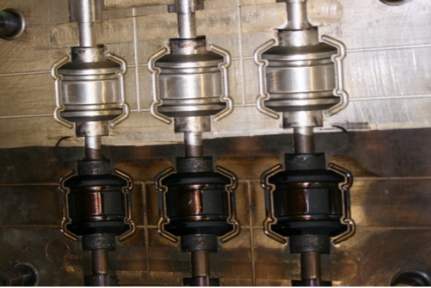
Currently, pulsed laser cleaning and coating removal systems cover a wide range of fields, from removing vulcanized residues on tire molds and engraved surfaces by ablation, to replacing insulating layers on wires, and removing coatings from delicate surfaces.
The main advantages of using lasers in surface cleaning applications include:
- Automated cleaning method
- Reduce inventory
- Improve safety
- No chemicals or sandblasting required
- Non-abrasive and non-contact cleaning process
Laser cleaning application
1.Surface polishing and rust removal in steel manufacturing
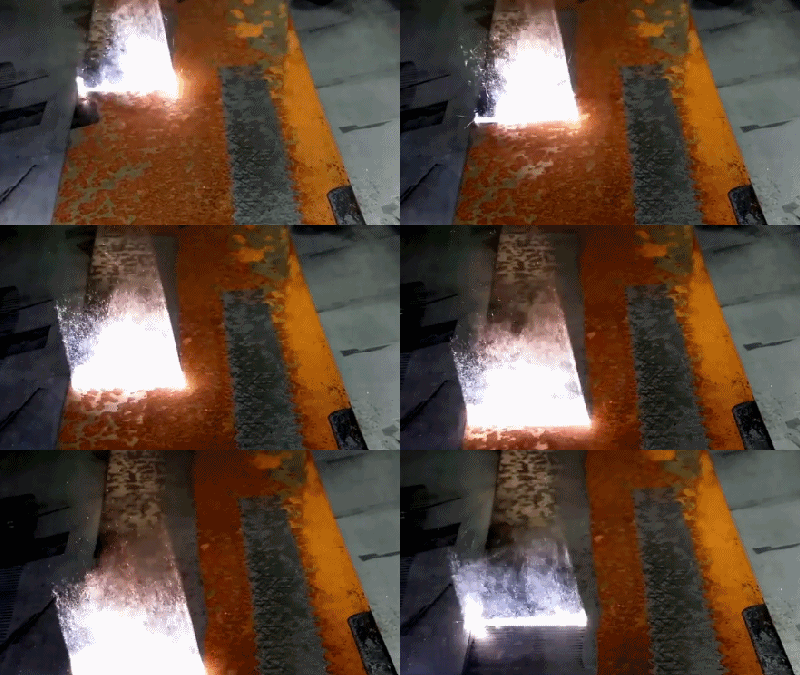
Laser cleaning is also an effective and efficient method to remove rust and oxide layers from the surface of metal materials. Rust and oxide layers are impurities formed on the metal surface due to natural or artificial processes. When a metal is exposed to moisture, it reacts with water to form ferrous oxide, thereby being synthesized. This rust will reduce the quality of the metal, making it unsuitable for use in many applications.
At the same time, due to the heat treatment process, an oxide layer will be formed on the metal surface, and the oxide layer is expected to change color on the metal surface, so as to gradually follow up finishing operations.
To remove these unwanted surface deposits, descaling is required, and the brake provides a smooth surface for pre-finishing and finishing (such as electroplating).
Traditional rust and scale removal methods include physical methods, such as sandblasting, polishing, scraping devices, additional blowing and wire brushing, etc.; there are also chemical methods, such as the use of alkaline or acid chemicals to remove the oxide layer. However, these methods not only cause environmental pollution, but also cause damage to the base metal.
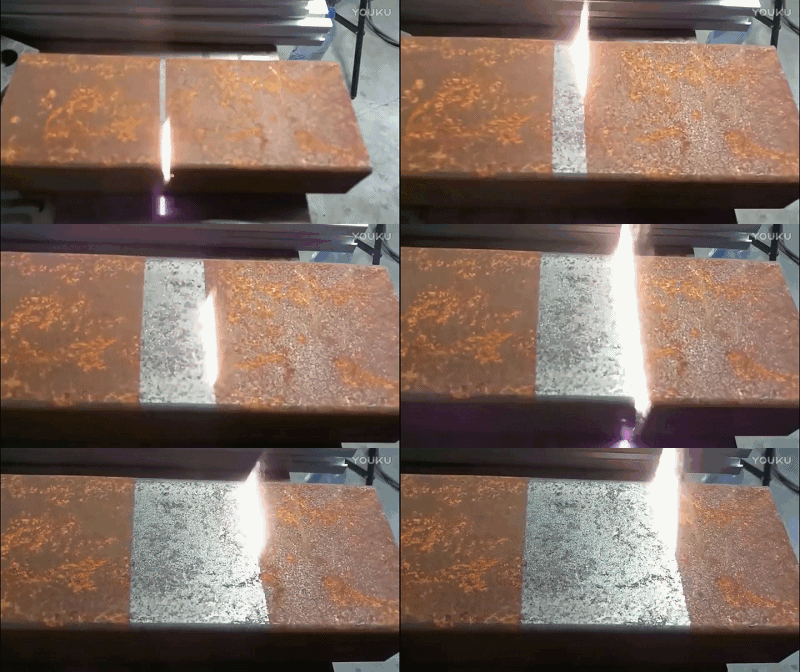
In order to avoid these defects, laser cleaning has become the preferred method for descaling and descaling operations. The rust layer/oxide layer is removed by irradiating a laser beam with high wavelength power and high repetition rate on the drilled layer.
Rust quickly absorbs the energy of the laser beam, causing the temperature to rise. Once the temperature is high enough, the rust will melt and eventually evaporate.
Pulsed fiber lasers are the first choice because they provide particle size control over power, wavelength and pulse duration, allowing the rust/oxide layer to evaporate without causing any damage to the base material.
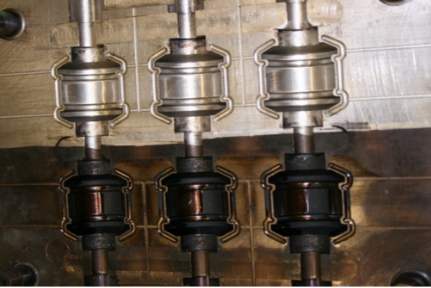
Before applying anti-corrosion protective coating to steel parts, the surface of the parts must be cleaned so that there are no impurities on the surface.
These cleaners include oils, greases, oxide layers, hydrates, shop primers, etc.
Since fiber laser cleaning adopts non-friction, non-contact methods, and does not involve solvents, chemicals or abrasive media, it is very suitable for surface cleaning preparation and rust/descaling. The cleaning process can be carried out on a small scale or on a large scale, and cleaning laser cleaning is an environmentally friendly, economical and effective rust removal method, which can prepare for the surface of the parts to be coated with a protective coating.
2.Cleaning the anode assembly
The quality of aluminum has an impact on the environment, economy and technology of aluminum production. A small part of the battery power is used to overcome the resistance of the pre-fired anode.
The presence of dirt and other impurities will increase the resistance of the anode, causing more battery short circuits. The typical existence also changes the life of the anode by increasing the consumption rate of the anode during the smelting process. From an efficiency point of view, it is necessary to clean and remove all impurities on the surface of the anode assembly before being used in aluminum smelting operations.
In addition, the above components are advanced tools that can be reused, but the main components must be thoroughly and carefully handled under specific conditions. Laser cleaning can meet the specific conditions that the component can be reused.
3.Laser cleaning can be used
◎Remove carbon bottom residue
◎Clean the halogen rod
◎Remove impurities on the casing and short rod
4.Prepare for metal bonding
In order to improve process stability, surface stress and better welding quality, the surface of the metal material to be joined must be prepared before welding and other joining techniques are applied.
If the surface of the metal material is not cleaned, the joints and seams are easily degraded, aggravated wear and even catastrophic failure. Laser cleaning can be used for surface treatment before joining, so as to obtain excellent tensile strength, improve corrosion resistance and hardness.
Laser cleaning is suitable for bonding preparation because it can remove oxides and other cracks that can reduce bond strength, such as grease and oxides. Laser cleaning is particularly suitable for applications involving curved surfaces or for cleaning parts with highly complex three-dimensional geometries.
One of the main benefits of laser cleaning is the ability to fine-tune its power and wavelength, and brake the precise correction of metals used in microstructures such as magnesium and aluminum. It also has high corrosion resistance, ensuring stable and long-lasting adhesion. .
Fundamentally, bonding methods are increasingly used in structural design applications instead of traditional connection techniques such as riveting and welding. This is because the bonding method has many advantages in combination with traditional technology.
These advantages include uniform stress distribution, reduced corrosion, reduced structure, vibration attenuation and sound insulation. However, these benefits can only be realized if the surface to be bonded is properly cleaned.
Laser cleaning is ideal for this type of application, because it can carefully remove oil, rust, protective coatings and other impurities generated during transportation without causing damage to the substrate material.
5.Preliminary for brazing and welding
In shipbuilding, precision tool manufacturing, automobiles and other related industries, aluminum and steel must be surface treated before welding.
Laser welding preparation is one of the many applications of laser cleaning, which removes ferrous and non-ferrous metals, additives and other impurities on the surface of metal and aluminum to prepare for alternative welding. It also ensures smooth and non-porous brazed welds.
When used as a pre-time for welding and brazing, laser cleaning performs the following operations:
◎ Thoroughly remove the workshop primer, hydrate and oxide layer
◎Remove grease and oil stains
In addition to welding and brazing preparations, lasers may be used to remove welding residues, such as residual flux and oxide materials, and thermal stains on the finished welded joint.
The benefits of using laser cleaning in welding and brazing preparation include:
◎Adjustable wavelength and power, used to accurately process the joint surface within the thickness of various materials
◎No damage to the base material (ie the galvanized layer of the steel plate)
6.partial removal of the coating
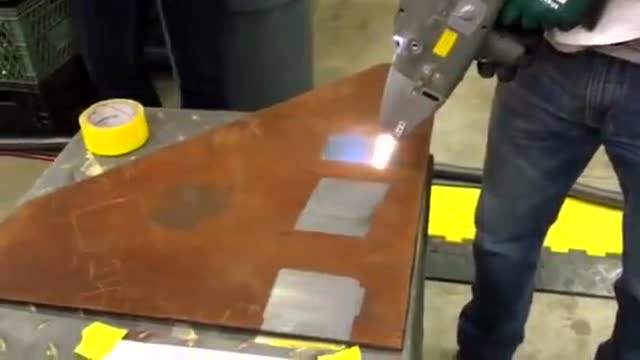
It can be used on almost all surface types, whether it is chemical anodized layer, oxide layer or organic coating. In the aerospace industry, coatings and paints are removed while maintaining the originality of the underlying material.
They overcome some of the inherent challenges faced in the past in partial removal of coating applications by accurately removing the coating in the designated area.
Laser can be used for:
◎Precise processing of function and design surface
◎Create Faraday cage and continuity series for the aerospace industry
◎Partially remove paint for electromagnetic compatibility
◎Provide junction points for wire connection
◎ Ribbon coating in the electronics and automotive industries
The coating must be removed from the key welds on painted structures/parts. Laser cleaning is very effective when the brakes are on inspection. The laser can remove the coating without manual or power tools, abrasives or chemicals, which can hide problem areas and cause further damage to the surface.
7.Selective paint removal
In the automotive and aerospace industries, it is sometimes necessary to remove the top layer of paint while protecting the primer. Usually, the weathered coating on the top of the vehicle needs to be completely removed before applying new paint.
Since the physical and chemical properties of the uppermost paint are different from the primer, the power and frequency of the laser can be set to remove only the uppermost paint.
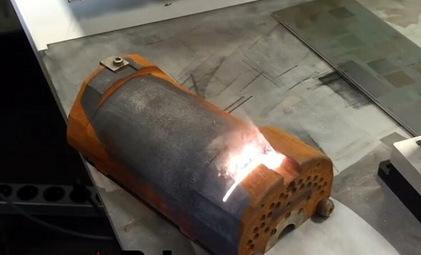
Since the laser has no mechanical, chemical or thermal effect on the primer, the primer remains intact. Then the corrosion resistance of the primer is ensured. When the parts need to be exposed to metal to achieve electrical contact between metal and metal, it is best to use the laser cleaning process, because it can save time and materials, and improve the surface quality of the finished product.
Summary
The use of lasers for polishing, surface cleaning and coating removal applications is rapidly expanding. Depending on the application, the pulse frequency, energy and wavelength of the laser must be precisely selected to clean, polish and ablate the target material. At the same time, any form of damage to the base material must be prevented.
Of course, this technology is also very likely to be suitable for cleaning large-area surfaces and large equipment/structures. Through the current progress in this field, these are expected to become a reality in the near future.